
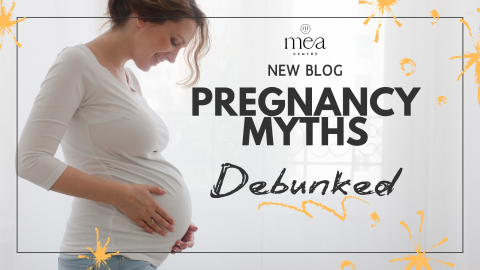
Thinking twice about your workout routine or reaching for your usual cup of coffee?
Pregnancy often comes with a long list of do’s and don’ts, and it can feel overwhelming to sort through endless advice from friends, family, and the internet. While some pregnancy precautions are important, others are based on outdated information or common misconceptions. Here are eight common pregnancy myths, debunked by research, to help you make informed, evidence-based choices throughout your pregnancy journey.
Exercise is bad for the baby. Unless your healthcare provider has recommended activity restrictions, exercise is safe and beneficial for both you and your growing baby! Physical activity can help ease common pregnancy symptoms, such as back pain and constipation, while also improving energy levels, promoting better sleep, and preparing your body for the physical demands of childbirth. That being said, it is important to listen to your body, avoid overexertion, and modify your activities as your pregnancy progresses. You can access the Society of Obstetricians and Gynaecologists of Canada’s physical activity guideline HERE.
You should cut out all caffeine during pregnancy. While a baby cannot break down caffeine as efficiently as an adult, moderate caffeine consumption is generally considered safe during pregnancy. Health Canada recommends limiting caffeine intake to 300 mg per day, meaning you can still enjoy your morning coffee while staying within the recommended limit. Keep in mind that caffeine content varies between drinks, so check serving sizes and labels when needed.
Vaccines cause miscarriages. False! This is a common concern, but decades of research and large-scale studies have found no evidence that getting vaccinated before or during pregnancy increases the risk of miscarriage. In fact, some vaccines are recommended during pregnancy because they help protect both you and your baby from infections that can lead to serious complications. These include vaccines against COVID-19, influenza, pertussis (whooping cough), hepatitis B, and respiratory syncytial virus (RSV). For more details, check out the Canadian Immunization Guide HERE.
You should sleep only on your left side. You may have heard that sleeping on your left side is best for optimizing blood flow to your baby, but sleeping on either side is safe during pregnancy! As you enter the second and third trimesters, however, it’s best to avoid sleeping flat on your back, as your growing baby can compress the vena cava, a major blood vessel that carries blood back to your heart. If you wake up on your back, don’t panic—simply roll onto your side and get comfortable again.
Morning sickness only happens in the morning. Despite its name, morning sickness can happen at any time of day, and even last all day! Rising pregnancy hormones, including hCG, are thought to contribute to nausea and vomiting, which often begin early in pregnancy. While symptoms usually improve after the first trimester, some people continue to experience them into the second or third trimester. Morning sickness can be managed by avoiding foods and smells that trigger nausea, choosing foods high in carbohydrates and protein, and speaking with your healthcare provider if your symptoms are severe.
The “pregnancy glow” will make you look and feel amazing. While hormonal changes and increased blood flow may give some people rosy cheeks or radiant skin, pregnancy doesn’t always feel as glowing as it looks. Between physical symptoms, changing emotions, and the adjustment to parenthood, it’s completely normal to feel overwhelmed, anxious, or simply not like yourself at times. You don’t have to feel amazing or “glowy” throughout your pregnancy. If you’re feeling overwhelmed, talk to us! You can book an appointment HERE.
Pregnant women should eat for two. Eating for two doesn’t mean doubling your portions! In fact, during the second and third trimesters, you only need about 300 additional calories per day—that’s roughly equivalent to four boiled eggs. However, your individual needs can vary depending on factors such as your activity level, pre-pregnancy weight, and whether you’re expecting more than one baby. Rather than focusing on how much more you’re eating, focus on what’s on your plate. A balanced diet rich in lean protein, whole grains, fruits, and vegetables provides the nutrients you and your growing baby need. Excessive calorie intake and weight gain during pregnancy can increase the risk of complications, including gestational diabetes, high blood pressure, and C-section delivery.
You’ll start craving strange things. Pickles and ice cream? Maybe! But not every pregnant person develops unusual food cravings. Hormonal changes during pregnancy can alter your sense of taste and smell, making certain foods more or less appealing than they were before. However, if you start craving non-food substances, such as dirt or laundry detergent, this may be a sign of pica. Pica can be associated with nutritional deficiencies, particularly iron deficiency, so it’s important to talk to your healthcare provider if you experience these cravings.
Pregnancy doesn’t look or feel the same for everyone, and that’s completely okay. Even advice that is generally safe may need to be adapted to your individual circumstances, health, activity level, and stage of pregnancy. When in doubt, don’t feel pressured to follow every piece of advice you hear from friends, family, or the internet. Talk to your healthcare provider about what’s right for you and your baby. By separating pregnancy myths from evidence-based information, you can feel more confident navigating the many changes that come with pregnancy, one decision at a time.
Need someone to talk to? Book a confidential appointment HERE.
By: Guest Blogger ~ Katelyn
Sources
https://americanpregnancy.org/pregnancy/exercise-during-pregnancy-benefits/
https://health.clevelandclinic.org/exactly-how-bad-is-it-to-sleep-on-your-back-when-youre-pregnant
https://www.betterhealth.vic.gov.au/health/healthyliving/pregnancy-morning-sickness
https://health.clevelandclinic.org/pregnancy-glow
https://www.hopkinsmedicine.org/health/wellness-and-prevention/nutrition-during-pregnancy
https://www.unicef.org/eca/stories/common-pregnancy-cravings-what-they-are-and-why-you-get-them