
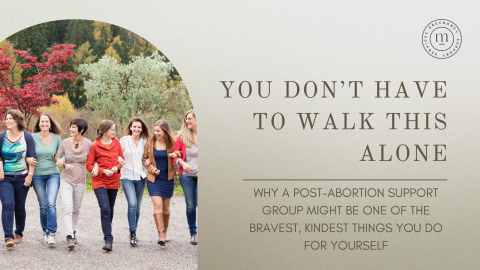
You may be feeling many things right now: relief, grief, guilt, confusion, guilt again, quiet shame, or just emptiness. Maybe you’re shocked by how much weight this feels like — even if, intellectually, you believed you made the right or necessary choice. It’s okay to feel all of this. And it’s even more okay to accept that this is something too heavy to carry alone.
One of the most healing decisions you can make is to reach out and seek support. A post-abortion support group can become a meaningful part of your healing journey.
What a Support Group Is (and What It Isn’t)
A support group is a safe, facilitated gathering (often peer-led or co-led) where people who share a particular kind of experience come together to listen, speak, empathize, and heal. It’s different from therapy, though it often complements therapy. It’s not a lecture or a sermon — it’s a space for you to voice what you’ve been carrying.
In a post abortion support group, you’re among others who have felt what you’ve felt: confusion, relief, sorrow, regret, isolation, the struggle to forgive yourself. The group provides a container to bring those emotions out, to see them, to name them, rather than letting them stay buried.
Why You Might Say “Yes” to a Support Group
Here are some of the concrete and psychological benefits that women report — and which research supports — when they choose to attend a post-abortion support group.
1. Reduction of isolation & shame
One of the deepest wounds after an abortion is the feeling that no one understands or that you must carry it secretly. Silence and secrecy intensify shame. The article After Abortion Healing: From Isolation to Hope emphasizes that loneliness is a huge part of the pain, that many women feel cut off from others, unable to speak about what happened. Support After Abortion
In a support group, you realize you’re not alone. Hearing others’ stories — their doubts, regrets, relief, and struggles — helps you know you’re not broken or the only one. That shared recognition begins to loosen shame.
2. Safe emotional expression & processing
Often, we stuff emotions—anger, longing, grief—because there was no safe place or person to hear them. In a group, you can say out loud what you’ve been holding in, in a space designed for listening, not judgment.
Psychological research shows that talking through trauma, in a supportive environment, helps with emotional regulation, reduces rumination, and prevents feelings from becoming stuck or overwhelming.
3. Validation, empathy, and relational repair
You might have experienced criticism, judgment, or dismissal when friends or family found out. In contrast, support groups aim to validate: “What you feel makes sense. You are allowed to feel that.” That kind of nonjudgmental empathy helps to rebuild your internal sense of worth.
A study from South Africa on women who terminated pregnancies in adolescence found that participants described how the support group intervention enhanced their self-worth, helped them shift from self-condemnation to self-compassion, and replaced shame with acceptance. PMC+1
It’s powerful when others mirror back to you: “I see you. I hear you. And I would choose you again.”
4. Education, coping skills, and resilience
Support groups often include brief educational or discussion components: topics like coping strategies, boundaries, assertiveness, self-forgiveness, self-care, grief work, communication, self-worth, and how to rebuild trust with yourself.
One intervention study showed that psychological care after abortion reduced symptoms of depression and anxiety at 1 and 3 months compared to no additional care. PMC
By actively learning and sharing, you build emotional muscles that help you face future life stressors — not just this event.
5. A path to self-forgiveness and integration
One of the more difficult parts is forgiving yourself. A support group creates space to move from self-condemnation to guilt (less global, more about the act), to sorrow, to accountability, and toward self-acceptance. In the South Africa study, participants noted that the group helped them accept responsibility, mourn, and then rebuild self-respect. PMC
Healing doesn’t mean forgetting or pretending nothing happened. It means learning to hold your story with gentleness, accepting your imperfect but worthy self, and integrating the experience into your life in a way that doesn’t define your whole identity.
A Gentle Invitation to Yourself
If you’re reading this and part of you is thirsty for solace, compassion, and connection — a support group may be one of the most life-giving steps you can take for yourself right now.
You’ve been through something meaningful and weighty. You don’t have to prove anything or justify your pain. You deserve a place to bring your questions, your grief, your anger, your relief — all of it. And you deserve others who can hold you in that space.
If you are ready to take the next step and attend a post-abortion support group CLICK HERE for more information on our upcoming dates.
Online Groups and Resources:
PAIL Network – Termination of a Pregnancy Online Support Group - PAIL Network
Support After Abortion - Client Healing Center | Support After Abortion
Abortion Recovery Centre - Abortion Recovery Centre
By: Elizabeth ~ Executive Director